Thursday, March 24, 2011

Aging women are like smelly cheese

If men age like fine wines, then I say women age like a fine French cheese.  A little stinkier, a little moldier, sometimes a little uglier, but there forms a deep intense richness, and a certain complexity and sophistication that can't be found amongst immature little fromage-lings.

Pleasantly surprised at Otto Ristorante when a birthday cake was presented!

Two weeks ago, I spent my first birthday in Singapore.  Things didn't go exactly as planned, but it ended up being a (short-lived) grand ol' time with merry making amongst new and old friends.  I even got cake!  Two cakes!  Thanks to the great people whom I joined at Otto Ristorante and later, Vicky Yim who brought her own homemade cake to TAB!  And thanks to Shao and Regina for the thoughtful gifts (seriously, I don't remember the last time I got cake and gifts on my birthday--NY/HK friends, you're awful). I was supposed to join friends at Johnnie Walker Jet Black and later more friends at Filter Club, but neither happened in the end.  That story, I'm not going to share.  ;)

I'll have to upload photos later on.  You can catch em at Gastronommy's Facebook.

Tuesday, March 8, 2011

Yan can, and you cannot.

Hey, he said it. Not me!

Martin Yan is adorable! He asked me for my autograph in our magazine, when I should have been getting his.
Last week, we saw Martin Yan do his famous chicken debone at Asian Food Channel Studio in Singapore.  (that's not only me laughing you can hear in the background..!  I swear)


Join Gastronommy's Facebook for more photos and videos.

Tuesday, February 22, 2011

Greetings from Niseko, Japan!

Just a quick hello from Japan!  Great powder, great food, great company.  I feel like all of Hong Kong and Singapore are here in Niseko too.


A-bu-cha and Bang Bang restaurants.

Thursday, February 17, 2011

Chef Santi Santamaria, 53 years old, has passed away tonight

Just a few hours ago, Santi Santamaria, famed Spanish chef has suddenly died in Singapore.


I was in Bangkok getting on a plane back to Singapore around 5pm, when my editor messaged me about the press conference with the celebrity chefs at Marina Bay Sands and some of her thoughts about Mario Batali and the event in general. I spent part of the flight trying not to regret not being able to go.

I arrived in Singapore around 8pm when she messaged again.  She had left the conference a little earlier and was standing outside when she was nearly bowled over by a stretcher carrying Santi Santamaria's limp body, followed by Santi's frantic executive chef and one of his staff.


And as we discovered shortly after, great Catalan chef Santi Santamaria has passed away to apparent heart attack this evening.  The restaurant was immediately closed to the press and public.

Life is short. Life is precious.  I had just met Santi for the first and last time this past Sunday in Singapore before I flew off to Bangkok.  I was eager to get back to Singapore to update about my Sunday visit and perhaps see the jolly chef again.  That was only 4 days ago.  I will continue to post about Sunday anyway, though the mood has changed considerably, hasn't it.

I joined Santi Santamaria and his chefs at Marina Bay Sands' Santi for the first (and now last) of his personal cooking demos by the man himself.  As he later explained, the purpose of the class was to display the amount of effort and thought that went into each of his dishes.

I took some video clips here and there of the class.


Before this step, Santi had taken out a brick of foie gras terrine and gingerly sliced a generous amount from the center.  He lifted it, and we awaited his next instructions in the demo ....
.... but then he just popped the whole thing into his mouth with a grin.
(those are the kind of cooking instructions I can follow like a pro)


Santi has certainly left his mark in the culinary world with his three-Michelin star restaurant in Barcelona, head-butting with el Bulli's Ferran Adria and for Asia... his new restaurant at Marina Bay Sands in Singapore.  My deepest condolences to Regina Santamaria and the rest of his family and staff.

Tuesday, January 25, 2011

Origins of the cocktail [with recipe]

Jerry Thomas' "The Bar Tender's Guide: How to mix drinks, The Bon Vivant's Companion" was the first drink book ever published in the United States. Originally published in 1862.

Punch, a drink sometimes associated with cheap high school school prom drinks was actually a precursor to the creation of the modern cocktail. The word derives from the Persian and Hindi word, “panj” or "paanch" respectively, meaning 5—for the five ingredients used in punch: spirit, citrus, sugar, spice and a dilution or water. Dating back to the 1650’s in Europe and India when punch was in its prime, the original cocktail was not served as individual drinks but in a communal bowl as the centre of every party. In those days of the original mixologists, the good ones were famous and were often invited to all the parties to make their proprietary punch recipes.

Punch eventually fell out of favor during the Victorian era as it was unseemly and considered excessive.  But the drinking didn’t cease necessarily, it instead led to individual servings rather than bowls. They even drank during breakfast…mainly because the water was unsafe for consumption, so people mixed spirits in to kill the germs.

Back in October, Jamey Merkel, the Brand Ambassador for Beam Global Asia created a punch cocktail for Appetite Magazine’s November issue (“Spice Journeys”).  That issue was actually focused on spices, but as I learned that day from him, spices too played a big role in the cocktail evolution.

So in those morning drinks, spices were typically included in the form of bitters.  After the punch popularity quieted down, individual cocktails were typically taken after waking up, with their primary purpose also being for medicinal reasons.  If someone had indigestion, a couple dashes of bitter mixed with water was often the doctor’s solution. (as a side note, this is the same reason spices play such a big role in various Indian cuisines)


Bitters were at the forefront until Prohibition in the 1850s, which Jamey otherwise described to me as the “Cocktail Dark Ages”.  Today, people often mistake Prohibition and the idea of Speakeasy's as the golden age of cocktails in the United States.  Prohibition stifled standards and creativity, and Speakeasy's created fast and easy drinks, so you could gulp and leave without getting caught. (The real golden age of cocktails was just before Prohibition)

The era of over-sweetened fruity drinks followed Prohibition in the ‘70s: Sex on the Beach cocktails and other “disco drinks.”  The idea of using fresh citrus, fresh juices and classic cocktails continued to be forgotten… until the late ‘80s when New York City’s Rainbow Room resurrected forgotten classics. Rainbow Room’s Dale DeGroff, the man often credited for this resurgence, heavily researched into the long-forgotten vintage cocktails when drinks were made with fresh juices, herbs and spices (bitters) without any shortcuts.

The punch recipe still stands as the forefront of mixology as the basic principle of balancing sweet and sour with dilution: 1 of sour, 2 of sweet, 3 of strong, 4 of weak.

 “If you look at certain bars in Europe, San Francisco, New York and other beacons of modern mixology, you notice they have really been bringing back the punch,” says Jamey on the historical significance of punch.

In honour of the punch’s significant contribution to the history of mixed drinks, Jamey creates a punch-inspired cocktail recipe for Appetite. Using less typical combinations of spice and ingredients, he selected the Indian spices of cardamom, cloves and cinnamon, and black pepper for a touch of heat. Spices, Jamey says, adds a depth to the cocktails, whether they are whole, ground or come in the form of bitters. He then combines his spice mix with the heavy flavor of Makers Mark Bourbon and the tang of fresh grapefruit, pineapple and sugar for balance. “In today’s time, we actually want to taste what we’re drinking in your glass. It needs to balance with the other ingredients,” explains Jamey. “We’re leaving the ‘disco drinks’ era like Sex on the Beach and are starting to come around full circle. It's not new, but it has been rediscovered.”

Bourbon Pineapple Punch
recipe by Jamey Merkel, created for Appetite Magazine

30 ml Makers Mark Bourbon
15 Bols Triple sec
30 ml Fresh pressed pineapple juice
15 ml Fresh squeezed pink grapefruit juice
10 ml sugar syrup
5 ml homemade spice tincure*

*Homemade Spice Tincure
500 ml neutral spirit (e.g. vodka)
20-30 green cardamom pods
2-3 tbls clove
4 cinnamon sticks
2 tbls cracked ground black pepper

1. Macerate in neutral spirit for 1 week. Taste it every few days to add spices to
taste.
2. Filter through tea strainer or cheese cloth.
3. Bottle it. It will last 2-3 months.

Shake and strain all ingredients over ice and strain over crushed ice. Garnish with grapefruit spiral and pineapple leaf.


[My edited variation of this piece can be found in Appetite's November 2010 issue]

Wednesday, January 19, 2011

16,000 Honeystrings: Happy Korean Street Vendors

I can't stop cracking up.  This video really makes my day.  I adore this guy's attitude--he's like sunshine!  And he knows some German?!   

 
"The King's Dessert, how to make 16,000 Honeystrings in 2 minutes"
Seoul, Korea

Thursday, January 6, 2011

Shopping at Park Slope Coop

I stayed with a friend in the blizzard-affected Brooklyn during this recent visit back to New York.  The day I arrived, James brought me to his nearby Park Slope Coop (apparently the oldest coop in New York), where visitors need to be signed in by the members-only grocery.  "Co-ops.  Hipster spawning grounds," as another friend, Hale puts it.


 James, VIP organic and locally grown produce shopper

I was telling him about Carl Warner and his work while we were walking around.  Near the cashier were all sorts of calendars (mostly food-related) when something caught my eye.  Funnily enough, a calendar of his work was sitting right there amongst the mess of other calendars!  I haven't bought a wall calendar in ages, but I picked this one up.


As for the rest of my NY trip, I'll update about that later.

Happy 2011 everyone!

Sunday, December 26, 2010

DEAF METAL

One of my brothers and I were casually flipping through Appetite's recent A-List on the airplane (Appetite's chosen 12 professionals- sommeliers, chefs, GMs who have made an impact on 2010 or whom we expect to make a big splash in 2011), and I was telling him about each of the personalities.


We came across the page with Chef Daniel Texter and I started summarizing the text, telling him the irony of his sunny personality and pretty dessert pieces in contrast to his death metal music interest.  I told him about a music festival for death metal, and my brother responded with a very strange expression, "Uh yeah... that is kind of weird and unexpected."  So we continue the conversation and he's still really weirded out until finally he realizes, "Oh, DEATH, not DEAF.  I thought he went to annual DEAF Music Festivals."

Totally politically incorrect, but we couldn't help but crack up for a good long time, wondering how the hell deaf music concerts worked for the non-deaf.

FOODSCAPES: You've never seen food photography like this


Look closely.
What do you see?

Jackfruit, dragonfruit, broccoli, pineapples, breadcrumbs....

Stare at the images in wonderment about which parts of the landscape are digital, which are real and what types of food are used to create it.  Carl Warner produces fantastic landscapes, made entirely of actual food products...  Cliffs are made of sour dough bread, forests made of celery, oceans made of salmon, houses made of garlic.

I featured one of his pieces in the December/January holiday issue of Appetite magazine, but due to text limits, I couldn't do much but let the piece speak for itself (yet a beautiful last page of the December issue, I might add).


Here on Gastronommy though, I'd like to include a short Q+A with the creator, Carl Warner and show you some of his dazzling work.  Here are some of my favorites:

The Pleasant Deception

I spy cabbage skies...


Calling his work, "the pleasant deception," Carl Warner is a photographic artists who creates projects entirely out of food.


What inspired you to start working with food?
It’s the fact that it is an organic material that has such amazing similarities to the larger aspects of the natural world. Also it is something that people relate to easily and have a natural affinity with. I am also a big foodie, I love to eat well and dine out. Food is something we can all afford to be passionate about.

What are the advantages and disadvantages of using food as art material?

The advantage is that there is such an incredible choice of ingredients in terms of shape, texture and colours. My palette is a three dimensional one which I can choose from around the globe.

The disadvantage is that it perishes and so we have to work very quickly, especially when creating a large scene and under hot studio lights. Certainly things like fresh herbs are a nightmare as they wilt and dry out before your eyes.


How do you come up with your landscape concepts?

I have sketchbooks full of ideas and drawings of details or wider scenes.  Inspiration can come from visiting a place or it in a film, on the web or in a magazine.  My inspiration can come from wandering around the supermarket or farmers market, or even in a restaurant.  I don't mind where they come from, so long as they come.

Once inspired, I pin it down on paper like Peter Pan's shadow being nailed down.  The drawing then becomes the blueprint for the shot which I show to my team, who then help me create the scene.


What is the average food budget?
Around a few hundred pounds (sterling), but this can vary depending on the size of the scene and how exotic the ingredients are.  Lobsters are going to cost a lot more than one scene made of cabbage.  There is also a lot more polystyrene in the scenes than food, and I have learned to build more with that in order to use less food.

How large are these landscapes?
They vary based on the scene.  I have a triangular table top which is about 12ft across the back, 9 ft deep.  The point nearest the camera is cut off so my foreground is only a couple feet across.  The table top is perfectly married up to the viewing angle of my wide angled lens.

Which was the most difficult image to create?

The most difficult is also my favorite, the Fishscape scene.  We had to get it all done in one day because of the smell.  Certain things I thought would work just didn't.  For example, the wake of the fishing boats didn't work with using small fish like sprats like I thought they would.  My food stylist saved the day by cutting sides of salmon and overlaying them onto the herring to form the wave patterns.  It's this kind of team effort with my food stylist and model maker that often pushes the work to a level that I hadn't expected.  It's exciting and rewarding.


What can we find in your new book?
The book is a culmination of the Foodscapes I have created over the last ten years together with several new scenes created especially for the book. It shows ‘behind the scenes’ shots of me and my team at work creating them, and I write about how they were inspired and conceived, showing the early sketches and the list of ingredients used in each image. I wanted the book to be more than just a coffee table book of ‘food pornography’ but a real insight into the processes of involved from initial idea to completed work.


He has also released a book recently, a compilation of all his food photography work over the past 10 years.  Just in time for Christmas.  Add that to my wishlist: Carl Warner Foodscapes

Friday, December 17, 2010

Restaurant critiquing: "It's good.... for Singapore"

Today in conversation, my editor asked me if it was difficult coming from New York to not be openly critical when writing my reviews.  Familiar with the unforgiving culinary journalism scene in Manhattan, she was wondering how I felt about writing in Singapore, where most food critics are only neutral at worst.

In addition to the relatively conservative culture here, it's a small town with a tiny industry network in Singapore.  Very few are brave enough to step on some toes (there are of course, the overly obnoxious sorts, who go beyond plain honesty and enter the realm of being diva-levels of disrespectful).  Answering her question, I feel my biggest dilemma is deciding how to scale the critiques--do I base my experience according to world standards like New York, Paris, Tokyo?  Or do I keep it on a local scale: "Yes, it's good... for Singapore."

Over dinner the other day with fellow New Yorker, Notabilia, she pointed out with amusement, "I notice everyone who has lived abroad at some point says that.  'It's not bad... by Singapore standards'."  She moved to Singapore just 6 weeks ago. 

Singapore is rapidly changing.  It's an exciting time.  Within just one year, countless chefs of international acclaim are opening up their doors here- Joel Robuchon, Daniel Boulud, Mario Batali, Tetsuya Wakuda, Guy Savoy, Susur Lee, Santi Santamaria, just to name a few.  And while there are still only a small handful of talented homegrown chefs who can keep up with the big boys, programs like the Culinary Institute of America are coming in and the culinary scene here will only continue to get better.  Thus, I can only be inclined to compare Singapore restaurants according to world standards.  I have great expectations of this mini island country.

Wednesday, December 8, 2010

Making Macarons: French vs. Italian Method [guest contributor]

Macarons. The 2 Methods of Making
by Jack LEE (part of a macaron series on Jack's blog)


When it comes to macarons, there are two methods of making them: the French method and the Italian method. Some chefs will tell you, they swear by the French method, and another will not hear of anything than the other. And knowing how chefs or pastry chefs are, once they have their mind set on their own philosophy, it is then a one way street. Personally, I don't have much of a preference, however if I were to choose to make macarons, I would most likely choose the Italian method over the French. *Only because you have less of a chance to over mix your batter.

In this post, I will explain the differences between the two methods.

Tuesday, December 7, 2010

Because Sharing is Caring (Free Ice-Cream for you!)

I can only eat so much ice-cream in a month, so I'll be giving away this Ben & Jerry's voucher for 2 Free Scoops of any flavor!


All you have to do is click this link and tell me what your favorite flavor of ice-cream is!  Winner will be randomly selected from the comments.  You have 5 days, starting... now!

Wednesday, December 1, 2010

Gastronommy TV: Mastering tea at Sanctuary T (NYC) [teaser video]


This video is long overdue.  Shot back in July in Soho, New York, "Tea Dude" East Grace Lee teaches us about the origins of tea, how to appreciate tea, how to steep the perfect cup and he gives us a recipe for one of his favorite tea cocktails.


Cameras: Patrick Lew and Matthew Won.  

In the meantime, 
Gastronommy readers get a 15% discount on any tea at Sanctuary T's online shop.  Use coupon code NOMMYTEA at the checkout.

Sanctuary T Restaurant
337B West Broadway
New York, NY
Tel: +1 (212) 941-7832

Wednesday, November 24, 2010

The difference between High Tea and Afternoon Tea.

[photo by Gastronommy, at Arteastiq]

Do you really know what high tea is?  I frequently hear and see the misuse of the term "high tea" by friends and even on menus offered by five star establishments.  Let’s clarify that today.

High tea
is confusingly used as the label for an elegant mid-afternoon tea (typically known to be enjoyed by society’s tai-tais and proper English ladies). On the contrary, the true origins of high tea was labeled by the UK’s working class as their early evening meal (5pm-7pm), in lieu of dinner.  The name high tea was created because of the “high” table it was eaten on, and the foods usually consisted of heartier dishes such as pot pies, sliced meats, custards and hot or cold tea.

The term most people are really looking for is “Afternoon Tea” or "Low Tea."  Daintier in form and with its own rules of etiquette, afternoon tea is rumored to have been created by one of Queen Victoria’s ladies-in-waiting.

To make the long story short, this lady-in-waiting, the Duchess of Bedford had a growling stomach and wanted to nibble and have good mid-afternoon gossip.  Inviting her lady friends to Belvoir Castle and encouraging them to leave their corsets at home for a relatively comfortable afternoon snack-a-thon, she began a new trend among the socialites of Britain. Their typical afternoon tea is still similar today with assorted light sandwiches, sweets, cakes and of course, tea.

Today, the term “high tea” has been completely misused especially in the United States and Asia… though they do carry the same essence and purpose at the end of the day.


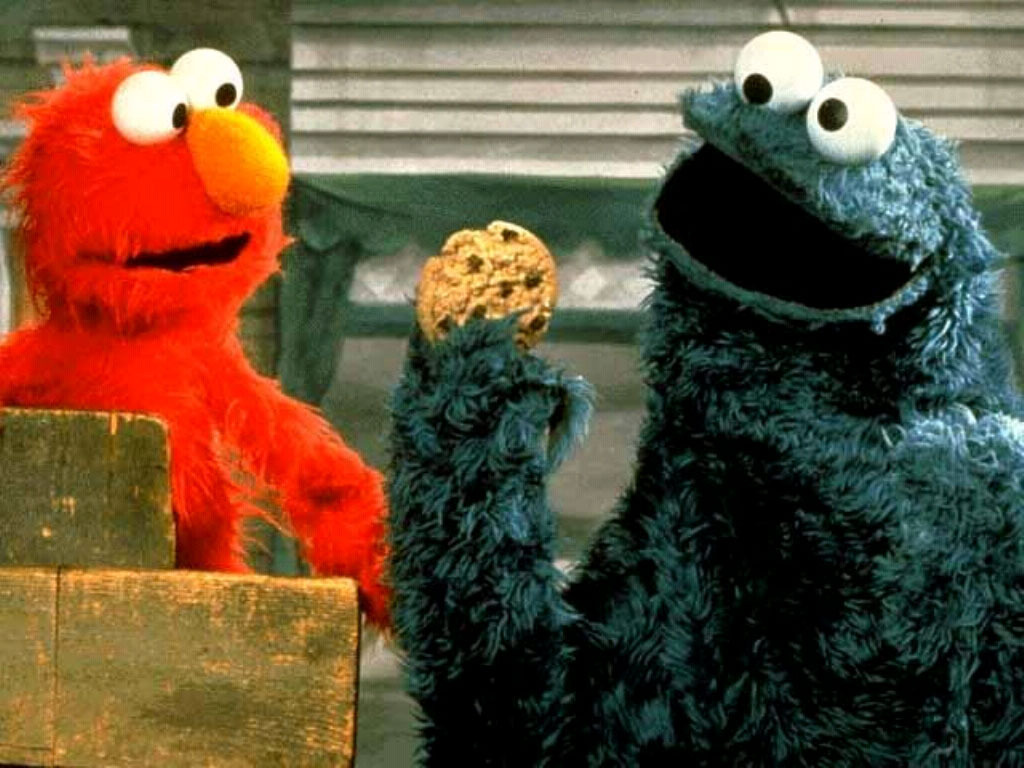
How does one OM NOM NOM NOM NOM?

An instructional video by the master himself:


Thank you Cookie Monster.

LinkWithin

Related Posts with Thumbnails